

It’s raining in Melbourne as I write this, and on my way to work I saw pale pink earthworms everywhere, scattered and exposed all over the footpath like soft-bodied streamers.
It was a visible reminder, as I dodged to avoid squishing the inaugural winners, in 2024, of the invertebrate of the year contest, of the magnificent array of 1.7m invertebrate species we share the planet with.
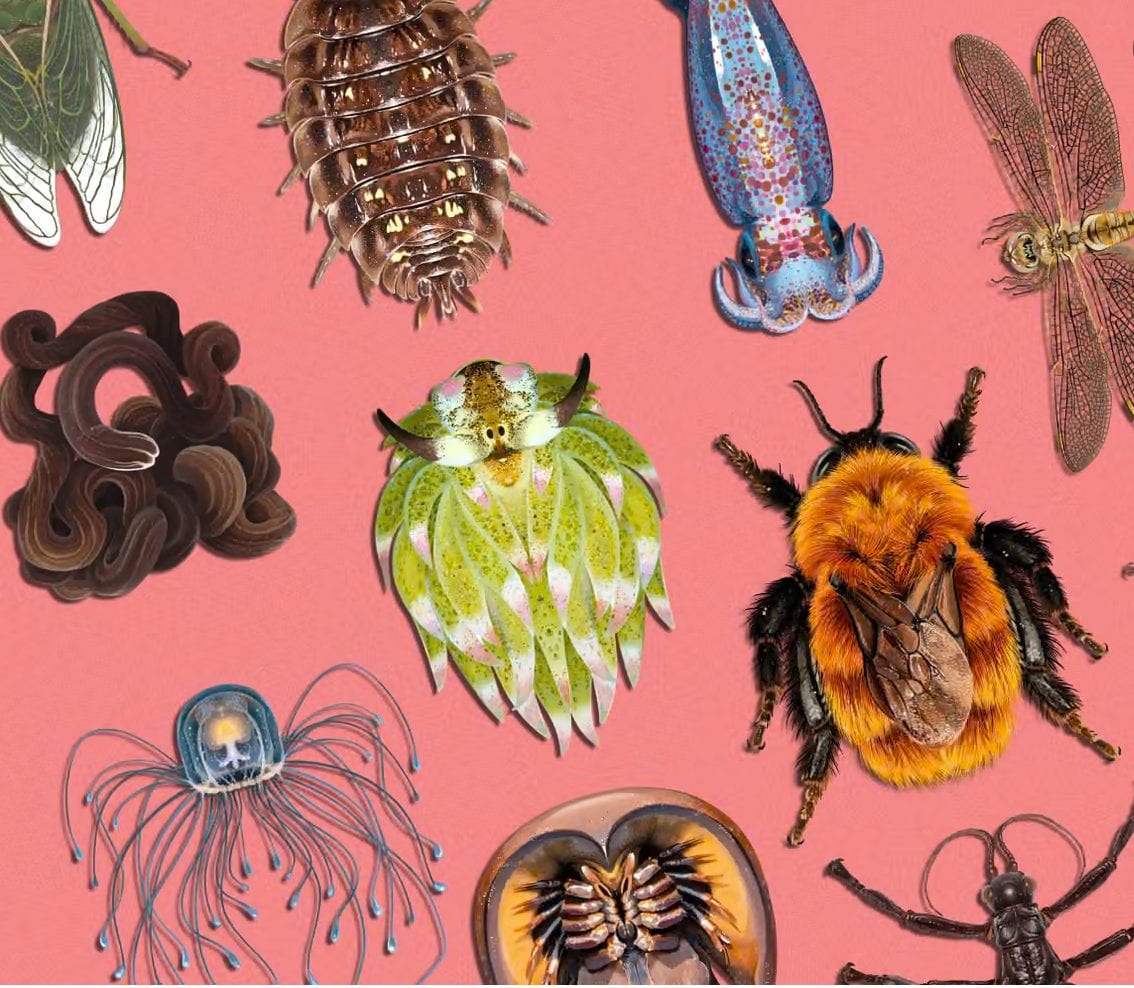
The Guardian’s annual celebration of the spineless gives us a chance to appreciate and celebrate invertebrates in all their weirdness and magnificence, whether they be furry, fast-flying, gelatinous or beady-eyed.
We’re lucky to have them, after all, and not just for the jobs they perform – recycling our waste, pollinating our crops, and filtering our water – but also for the joy they bring (hello, bumblebees!). Especially when so much of the world’s biodiversity news is devastating.
More than 1,300 readers have nominated their favourites. We have weevilled it down to the top 10. Now, it’s time for you to vote – after this week’s most important reads.
Essential reads
- Could England and Wales ever run out of water?
- The return of the caspian tiger: how a species feared extinct has come back to Kazakhstan
- ‘Unprecedented, dangerous territory’: US north-west reckons with a summer of historic wildfires
In focus
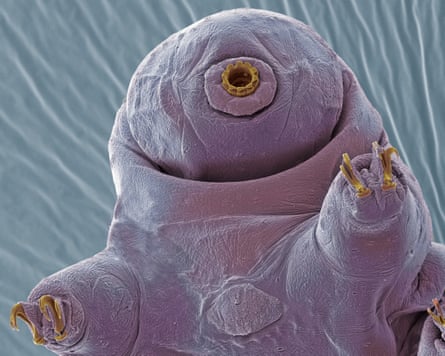
Reigning champ … 2025’s winner, the Milnesium tardigradum. Photograph: Steve Gschmeissner/Science Photo Library/Getty Images/Science Photo Library RF
It’s easy to think of invertebrates as small, particularly as our 2025 winner – Milnesium tardigradum – is literally microscopic. To balance the scale, this year’s contest features some marvellously big-bodied bugs (although none so large as the colossal squid, the heaviest invertebrate on the planet).
Take, for example, Bombus dahlbomii, a bumblebee found in the mountains of Patagonia, which measures up to 4cm long and is attracted to red flowers. “Bumblebees are the pandas of the insect world, and a mascot for biodiversity conservation,” says bee nominator and researcher Anton Gradišek in Ljubljana, Slovenia.
I agree, although if you aren’t yet smitten by their bumble behaviour – check out the footage of them playing with wooden balls, or licking their tongue-like glossa after tasting something sweet – then there’s a good chance this year’s giant ginger fuzz ball affectionately known as “flying mouse” may be enough to tip you over the edge (although, do check out its cute but tiny competitor, the leaf sheep, a solar-powered sea slug with doe eyes that spends its days grazing on algae).
Another huge contender, the supersized Lord Howe Island stick insect (Dryococelus australis), offers us a note of hope with its conservation comeback story. One of the rarest invertebrates in the world, the 20cm-long “walking sausage” was thought extinct, only to be rediscovered in 2001. The species has since been successfully bred in captivity and there are plans to reintroduce them back to the island.
Too sweet? Too hopeful? Readers with more macabre tastes may prefer the bootlace worm (Lineus longissimus), a metres-long, blackish-brown creature that discharges a toxic ooze and smells like sewage.
If their pet names are anything to go by, a couple of common critters have already captured hearts, and may soon capture votes.
The common woodlouse (Porcellio scaber), a small brown isopod that feeds on rotting plants and breaks down wood, has more than 300 regional names in Britain alone, and more in other places and languages. Here in Australia, I’ve known our local variants as “slaters”, or “butchy boys”, but will henceforth be adopting “witch of the wood” (gwrach y coed in Welsh).
Many common cicada names in Australia were coined by children, making some sound a bit like marbles or superheroes. The greengrocer, which announces its presence in Sydney and Melbourne with an ear-splitting chorus, has an evocative alias – yellow Monday or masked devil – for every colour.

 444.92 SRY